
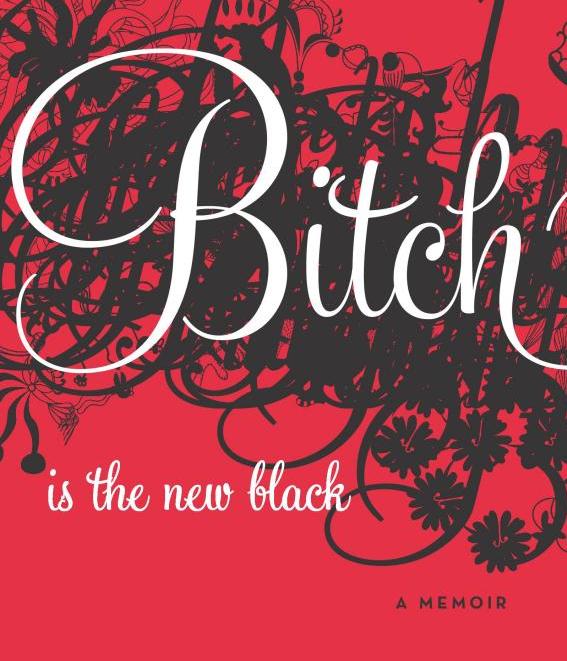
When I first heard that I would be getting an advanced copy of the book, Bitch Is The New Black, I hurried to read the original Washington Post article that author Helena Andrews posted. When I had read before, I sat with my head tilted trying to ascertain exactly what she was trying to get across to the reader. But I think it was her herself who confused us all when she said, “What I am trying to say about single Black women in any urban environment is, you don’t know them as well as you think you do. They may not know themselves as well as they think they do.” And that was the basis for which I started reading this book. Admittedly, I placed her in a category of, and with all due respect, another Black woman who has lost her damn mind.
The first few chapters proved to be entertaining. I felt that I knew this woman very well because she was almost exactly the same girl as so many Black women I knew in DC who were single. It is the woman that most people blog about, when they are not digging deeper to find that there are more precious stones to be found. I read about a woman in her late twenties, in DC, who attended an Ivy League school, was not originally from DC, and who also happened to be a Black Greek. Maybe it’s just me, but I’m looking at what is THE dating pool in DC.
But it reminded me that this presumed dating pool in DC is still too predictable, not practical, but most of all wildly inconsistent. It reminded that Black women have the potential to make excuses and exceptions, they can be stubborn, yet settle, and most of all there is always collusion amongst friends. Being the man on the other side of that phone conversation with “Dex”, a character in the book who represents THE dating pool in DC and other major cities, I realize that women are on to the “It’s not you, it’s me” speech. But he also reminds us that despite how strong our Black women are, they have a soft spot in their heart that makes them vulnerable and thus they need us to protect them. I can’t count the amount of women that for nothing more than the faith in things not seen still continue to deal with a “Dex” who does nothing for them but let them down constantly and frequently.
Helena has a support system as she goes through life and love. And whether her friend is single or not, it reminds us that oft times your support system can cause you to be single. I think many women listen to their friends advice about dropping a guy, instead of brainstorming ways about how to make this guy work. Notwithstanding sometimes your friend allows you to deal with a guy who you need to drop. But in the end your friend is always there for you, so… le sigh.
The book touches on the Helena’s relationship with her mother and her reflections on childhood. And as we reach the middle of 2010 we realize that long gone are the tales of Black homes that looked like the Cosby show. They have been replaced with single mothers, who might be lesbians, children dealing with domestic violence before they should have to, and the hypersexual version of playing “House.” (This version is not shown on FOX 5.) I walked away with a feeling that from cradle to the here and now, Helena had always been given lemons and told to make lemonade. And I think she ends up realizing that things may not be the way they were planned, but they are just okay.
In conclusion, was it a good read? Most certainly. I read the book in two sittings. On the way to NYC, and on the way back from NYC. Is it a book for everyone? I can say without a doubt that every Black woman should read this book whether you be single, in a relationship or married, there’s something in this book for everyone and I’m sure you know Helena very well. For men, this book may convince you that the woman you are dating or pursuing is not an alien or oddity. Nevertheless, I can’t wait to see this book become a best-seller. 
In short, Dr. J approves this message.


I guess I'll give it a read, as long as you can say it's not just more "there's no hope for black women" BS.
Thanks for the review, I am even more excited that I finally buckled down and ordered it! From your review, it sounds like Helena is the reflection most women see when they look in the mirror. More than knowing her it sounds like many of her stories could have been pulled from the life and times of any one of my girlfriends…even my own life I'm sure.
I will read it..but I am so tired of the media and people talking about how dire the dating sitution is for black women…its not entirely true, in my humble opinion.
I don't know any black women without a man..that really wants one! I see time and time again a coupla of my friends turning down perfectly nice guys on a daily basis…the reasoning is always a little offbase to me…I just figure she really doesn't wanna man..if none of these guys can even get a first date…its not like men aren't approaching women out here…its just BS to me..but I am just offering my take on it….
Good post!
You took the words right outta my mouth! Now I won't lie, I do have friends who are desperate for men. They will take anything that comes their way. This probably has something to do with why they're always crying on our shoulders 2 months after they meet these dudes. But the rest of my girlfriends are either with men or single…BY CHOICE. Dumping dudes left and right because they haven't found a decent fit for them yet (note I did not say perfect fit, I said decent–we don't do fairy tales over here).
Not because of a shortage of black men, or because black men are intimidated, or because black women are too independent. The answer is simple. There are plenty of good black men out there, but just because you're a good man does not mean you're a fit for every woman.
I'm convinced that the rest of society (aka the naturally untan) wants to see the black community do things like them: married at 22-23, kids by 25, house by 30. But for the most of them, doesn't that there plan lead to divorce by 45?!? Just let us do things our way…
In the words of Blackstreet, Dr. Dre, Queen Pen, and Little Penny… "Mmmmmmmhmmmmmm."
Everyone has the love life they desire, except for SaneN85 and Andressa, because they live so far away from civilization I don't want to catch them humping a tree and calling it a Black man.
LMAO, I'm mad at you for this comment!
I have to disagree with these comments. Although I'm a little spent with this whole topic, there are 2 things I want to note here.
1) Having a man and being married are 2 different things. I have tons of guy friends who are willing to have girlfriends, but, getting married is another thing entirely. So, just because these men are hollering doesn't mean they're tryna put a ring on it.
2) I would have no problem with black people (male and female) waiting till their mid 30's or early 40's to get married if we weren't having so many babies out of wedlock. More than anything else, family structure is cyclical. If your mom was a single mom and your dad wasn't around, chances are, whether or not your married will not be a deal breaker in your decesion to have kids. If you're a man raised by a woman, you have to make up, for yourself, what it means to be a man in this world. For many of us, that means – perpetual bachelor. You also, don't see a problem with impregnating someone you're not married to. It's just, the way things are.
So – I say all that to say, it is an issue worth discussing. But, the issue worth discussing is not "Why are so many black women single". Nor is it "Where are all the good black men". The issue is, "What happened to the black family, and what do we do to fix it".
Very good points. I'm currently reading and going to review Hill Harper's book, the Conversation. I know he's been involved in a lot of these discussions. But his books touches on the issues you've raised. It examines the relationship between black men and black women, from stereotypical thoughts we both maintain, to the value we place on one another and our community. So far I like it…he doesn't claim to be a relationship expert, as he's single. But he does speak with black men and women of all ages and relationship statuses.
I'm not finished but I like what I've read so far. There are a lot of things I already knew…but it's honestly forced me to be honest with myself about my own hang-ups, stereotypes I maintain, and whether or not I've been the type of mate a black man has needed or wanted in the past.
I sooo appreciate this post. It's spot on!
Right on brotha!
I was planning on copping the book for Mrs Ed-Nice; so we'll see what she thinks of it…
I'll treat it like Steve Harvey's little opus: if someone gives me the e-book for free, I'll read it.
Lmao @ Hugh. I was scared to read this posting b/c I know I'm getting the book for my birthday and I plan to read it then. With that said, I will treat the book just like I did Chris Rock's black hair 'documentary' and Steve Harvey's how-to manual… w/ kid gloves. We shall see. I want it for entertainment reasons mostly.
When I first read an article about the book… my first thoughts: Oh here we go again. But I'll read it and see for myself… I'll leave you with a quote from the previously funky now FlyBlackChick.com:
I’m really tired of having the “Why Black Women Are Single” bullshit shoved down my throat by white mainstream media outlets for the past couple of months, and by some black people who only want to make $$ off of the issue, and not offering any thing other than negative discourse and finger pointing.
(…)
So to all of the white mainstream media hoopla over the single black woman crisis that is disrupting the world, I leave you with this:
What we (single black women) eat, doesn’t make you shit…mind your own business.
I watched her little video blog sometime last year when she was talking about the book. I have to admit that I don't like the title at all and I can't really relate to her life struggle. Sorry, won't buy the book, not interested.
I've been wanting to read it since the WashPo article. I always thought that she was vastly misunderstood back then, and when I saw her interview on Modern Day Matchmaker, I was further interested. I've read several reviews about it and interviews about her so while I know her background and what most of the chapters are about, I'll still check it out.
Let me remind you, the book offers no relationship advice, it's simply a memoir. Read this book as you would any fictional piece of work, it's simply a story about a girl and her struggle. Either you can relate or you can't, but you'll be entertained.
Thanks for the clarification….seems a little more intriguing now.
Only makes it more appealing.
not that i don't care about black women or black relationships or whatever this book is about i probably will never read this book. just not that interested.
"Let me remind you, the book offers no relationship advice, it’s simply a memoir. Read this book as you would any fictional piece of work, it’s simply a story about a girl and her struggle." – I might read it now
I dont know if I want to spend the money on her book to be entertained, I can get that from the plentiful of ghetto-smut-hustler books. I want to know whats her insight, as a writer you are to expose something unique about the human condition.
All I get so far is her moms (like 50's) was bi-sexual (though she stricly refers to her as a lesbian). Grandma tired some trickery that became the basis for her life.
But outside of that I havent heard enough to become intrigued to fork over my money.
Nice.
"Admittedly, I placed her in a category of, and with all due respect, another Black woman who has lost her damn mind."
I giggled out loud at this. I'm curious about this book now. I'm gonna see if I can find it
or get the e-book, whatever happens first. This post kinda reminded me of that documentary Diary of a Tired Black Man. #sukishrug That documentary had me feeling all KINDS of ways…But great post Dr.
Well it can't possibly be any worse than the Jimi Izreal book #shouldaputthat$20inmygastank
As this dead horse continues to be whupped i've learned:
-never be fooled by a snappy title
-never take relationship advice from someone who's not even in one or thrice divorced
-fat brothas should just say no to smedium t-shirts :0)